
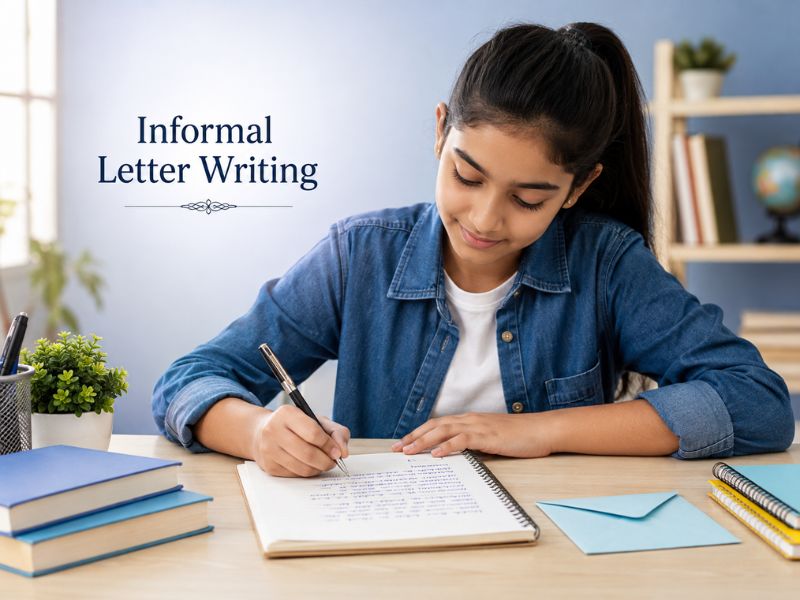
In a world of instant messages and quick emails, I still believe a handwritten letter carries a special kind of warmth. That’s where informal letter writing comes in; it’s one of the simplest, most personal ways to stay connected with people we care about. At British Academy, I’ve guided students of every age through this exact question: where do I even start? By the end of this guide, you’ll know the format to follow, the tone to use, and the topics to practise so the whole process feels natural rather than stressful.
What Is Informal Letter Writing?
If you’re asking yourself what informal letter writing is, the answer is simpler than it sounds. It’s a personal letter you write to someone you already know well a friend, a parent, a sibling, or a relative. Unlike a formal letter, there’s no strict business tone to worry about. I write these letters the way I’d talk to that person face to face: warm, conversational, and honest.
I always tell my students that what informal letter writing really comes down to is intent. Are you sharing news, thanking someone, or inviting a friend to an event? Once you know your purpose, the rest almost writes itself. You’re free to use a casual letter style, short sentences, and your own voice, because the goal is genuine correspondence, not correctness for its own sake.
Informal Letter Writing Format: Step by Step
Once you understand the purpose, the next thing to learn is the informal letter writing format itself. I like to break it into eight simple parts, because once you memorise these, you can write on almost any topic without getting stuck.
- Sender’s address – written at the top left, so the reader knows where the letter is from.
- Date – placed just below the address, usually written as “10 August 2026.”
- Salutation – a friendly greeting such as “Dear Riya” or “Hi Ananya.”
- Introduction – ask about the recipient’s well-being or refer to your last conversation.
- Body – the main message, kept to one or two short paragraphs.
- Conclusion – a warm closing thought or hope for future contact.
- Complimentary close – phrases like “With love” or “Best wishes.”
- Signature – usually just your first name.
This informal letter writing format is flexible by design. You don’t need to follow it word for word, but keeping this basic structure makes your personal letter easy to read and shows the recipient you put thought into it. I recommend practising this layout a few times on paper until placing each part feels automatic.
Why the Format Still Matters
Even though informal letter writing gives you freedom, a loose structure keeps your message from feeling scattered. Students who skip the address or date often lose easy marks in exams, and readers of a real letter appreciate knowing exactly when and where it was written. Think of the format as a gentle guide rail rather than a rulebook it keeps your friendly tone intact while making the letter easier to follow from start to finish.
Informal Letter Writing Topics Every Student Should Practise
Practice makes the process feel effortless, and the fastest way to practise is by working through real informal letter writing topics. I usually give my students a mix of everyday and imaginative prompts, so they get comfortable writing in different tones.
- Write to a friend describing your summer holiday.
- Write to your parents about your first week at the hostel.
- Write to a cousin thanking them for a birthday gift.
- Write to a sibling advising their exams.
- Write to a friend inviting them to a small celebration.
- Write to a relative apologising for missing an occasion.
Working through these informal letter writing topics regularly builds confidence and helps you express feelings without overthinking every sentence. I’ve also found that rotating between happy, thankful, and apologetic topics gives students practice with different emotional tones, which is exactly what exams and real life both demand.
Informal Letter Writing in English: Tips for Every Age Group
Whether you’re a young learner or an adult brushing up on your skills, informal letter writing in English follows the same core principles: simple vocabulary, a friendly tone, and short paragraphs. For younger students, I focus on basic sentence structure and everyday words. For older students and working professionals, I encourage slightly more descriptive language while keeping the letter personal rather than stiff.
A few habits genuinely improve informal letter writing in English:
- Use conversational openers like “I hope you’re doing well” instead of stiff greetings.
- Keep each paragraph focused on one idea: the update, the request, or the news.
- Read your letter aloud before finishing; if it sounds like natural speech, you’ve got the tone right.
- Avoid over-explaining. A letter to someone you know doesn’t need excessive formality.
Beginners especially benefit from starting small. Write two or three sentences per paragraph, use words you already know well, and build up gradually. Fluency in this style comes from repetition, not from memorising complicated vocabulary.
Formal vs Informal Letters at a Glance
Students often mix up the two styles, so I find a side-by-side comparison genuinely useful.
| Feature | Formal Letter | Informal Letter |
| Purpose | Job applications, complaints, official requests | Personal news, invitations, thanks, advice |
| Tone | Polite, professional, objective | Warm, relaxed, conversational |
| Language | Formal vocabulary, no slang | Simple, natural, personal expressions |
| Structure | Strict format with subject line | Flexible but organised |
| Audience | Officials, companies, unknown recipients | Friends, family, relatives |
Seeing the two side by side usually clears up any confusion about which style suits a given exam question or real-life situation. As a rule of thumb, if you’d greet the recipient with “Dear Sir/Madam,” you’re in formal territory; if you’d start with their first name, you’re writing an informal letter.
Benefits of Practising Informal Letter Writing Regularly
Beyond exams, this kind of writing builds skills that stay useful for life. Here’s what regular practice actually gives you:
- Stronger vocabulary – you naturally pick up new words and phrases the more you write.
- Better organisation – short paragraphs teach you to structure your thoughts clearly, a skill that carries over into emails and reports.
- More confidence in English – expressing feelings on paper makes it easier to express them out loud too.
- Closer relationships – a thoughtful letter to a friend or family member often means more than a quick text ever could.
I’ve noticed that students who write informal letters regularly also become better formal writers, simply because they’ve already learned to organise their ideas into a clear beginning, middle, and end.
Common Mistakes to Avoid
Even confident writers slip up sometimes. Here are the mistakes I correct most often in class:
- Forgetting the date, which makes the letter feel incomplete.
- Writing too formally, which strips away the friendly tone that defines this style.
- Using overly long paragraphs instead of short, focused ones.
- Skipping the closing line and signature at the end.
- Repeating the same phrases in every letter instead of varying the wording.
Fixing these small issues instantly makes a letter feel more polished and complete, and it’s usually the difference between an average answer and a strong one in exams. In our writing sessions at British Academy, we spend extra time on exactly these details, because small corrections often make the biggest difference in how natural a letter reads.
Where to Practise Informal Letter Writing in Delhi
I put this guide together because I’ve seen hundreds of students go from a completely blank page to a confident, properly structured letter, but only when they get the right kind of direction. If you are in Delhi and you want something more personal, our English Language School in Delhi has dedicated sessions for writing, plus everyday communication too. We also run Spoken English Classes in Delhi for learners who want to grow fluency alongside their writing skills, and our English Speaking Course in Delhi is made for anyone who wants both confidence and accuracy in one tidy place.
Learning informal letter writing isn’t really about memorising rules; it’s more like discovering your own voice on paper. With the right format, steady practice across different topics, and a little bit of guidance, practically anyone can write a letter that comes across as natural and easy to understand. If you want hands-on help, get in touch with the British Academy for a free demo class, or check our Google Business Profile to see more about our courses, and start writing with confidence today